
Eire Vacuum Services Blog
Is Your Mud or Slurry Actually Liquid Waste?
Samantha manages enquiries, bookings, and the day-to-day business side at Eire Vacuum Services.
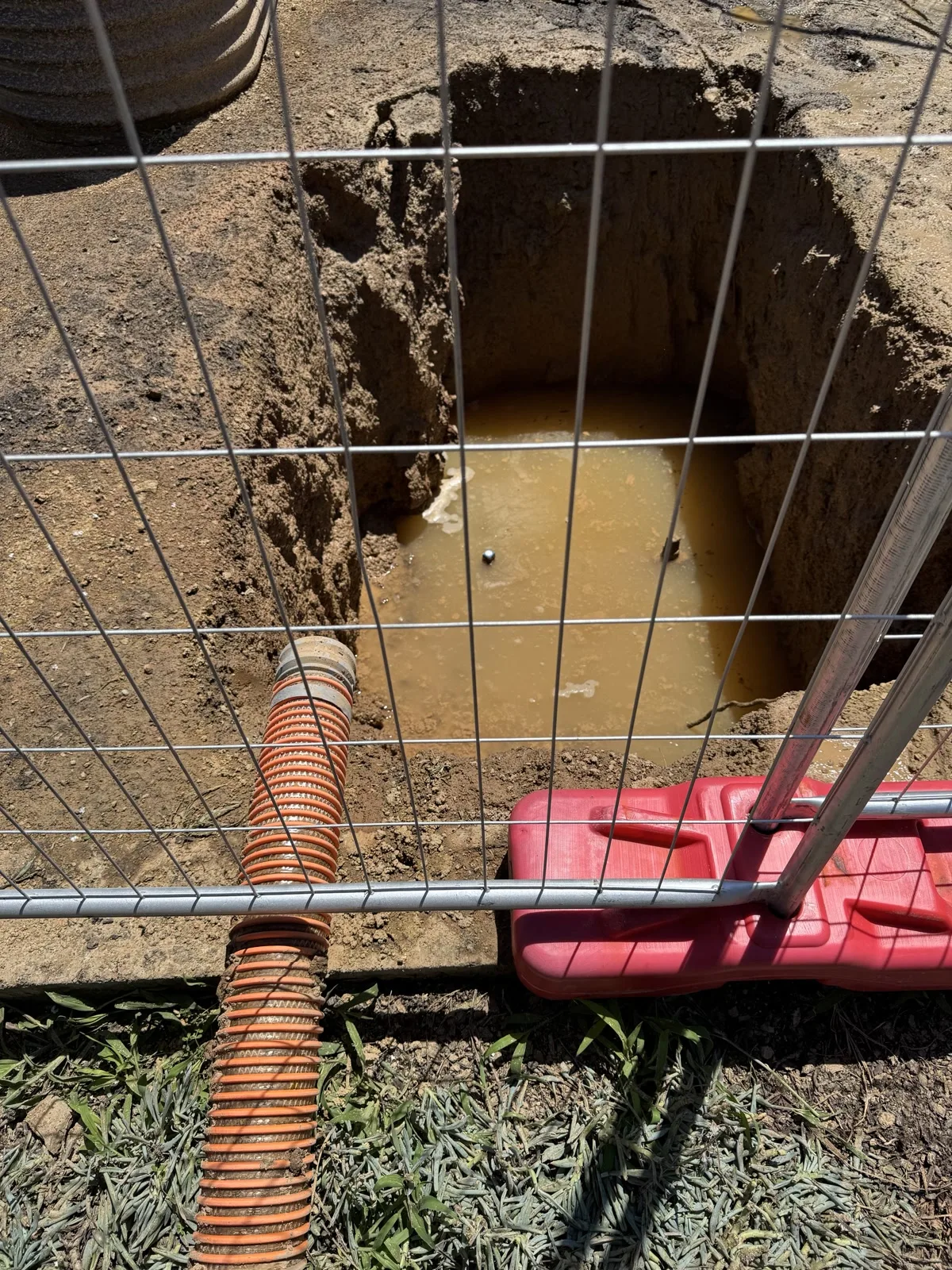
"Mud" and "slurry" are site words. They describe the material. "Liquid waste" describes your obligations. It is one of six waste classifications defined in NSW law, it has a written test, and it is the only one of the three that changes what you may lawfully do with the material. That is why two loads that look identical in a pit can carry different obligations, and why the question "is this mud or slurry?" almost never has a useful answer.
Key takeaway
The NSW test is not about how wet something looks. Its most practical criterion is whether the material is "generally not capable of being picked up by a spade or shovel". If a shovel cannot lift it, that is the signal to run the classification properly, whatever anyone on site is calling the material.
The three words, and what each one actually tells you
Mud is soil or fines carrying enough water that it stops behaving like soil. Slurry is solids suspended in water, usually produced by a process such as drilling, coring, cutting, jetting or vacuum excavation. Liquid waste is a classification under the NSW waste framework, decided by a written test rather than by what the material looks like.
| Term | What it actually tells you |
|---|---|
| Mud | How hard the material will be to handle, and little else. Nothing about your legal duties. |
| Slurry | Where the material came from, which is a useful hint at what is in it. Still nothing about your duties. |
| Liquid waste | What may lawfully be done with the material, and which facilities may receive it. |
The first two describe the material. Only the third describes your obligations.
On a Sydney site, slurry usually arrives one of three ways. From drilling or coring, where water or drilling fluid returns to the surface carrying cuttings. From vacuum excavation, where water is used to break up ground before the material is sucked into a tank. Or from rain and groundwater turning excavated spoil into something a truck can no longer carry away as soil. None of those origins settles the classification. That is the next question.
The NSW test that actually decides it
Waste classification in NSW is not a matter of judgement, or of what the material is called on site. The NSW EPA’s Waste Classification Guidelines set out a step-by-step process, and they are explicit about who has to run it: "It is the responsibility of those who generate waste to classify that waste."
That means you, or whoever generated the material. Not the contractor who removes it.
The six classes, and why the order matters
The Guidelines state that "The following classes of waste are defined in clause 49 of Schedule 1 of the Protection of the Environment Operations Act 1997 (POEO Act)":
- special waste
- liquid waste
- hazardous waste
- restricted solid waste
- general solid waste (putrescible)
- general solid waste (non-putrescible)
The order is not decorative. The Guidelines require that "the following steps must be followed in the order below", and add: "Once a waste’s classification has been established under a particular step, do not go to the next step". Step 1 asks whether the waste is special waste, which covers clinical and related waste, asbestos waste, waste tyres, and "anything classified as special waste under an EPA gazettal notice". Step 2 is the one that decides wet material.
Step 2: is it liquid waste?
The Guidelines define it directly. "Liquid waste means any waste (other than special waste) that:
- has an angle of repose of less than 5 degrees above horizontal
- becomes free-flowing at or below 60 degrees Celsius or when it is transported
- is generally not capable of being picked up by a spade or shovel
- is classified as liquid waste under an EPA gazettal notice."
If the material meets that description, the Guidelines are equally direct about what follows: "If the waste meets the criteria outlined above, it is classified as liquid waste, and no further assessment for classification is required." You stop there.
Two of those four criteria are things you can observe on site without a laboratory. An angle of repose under 5 degrees means the material spreads out nearly flat instead of holding a heap. Becoming free-flowing "when it is transported" is the one people miss: spoil that sits in a pile all morning can behave very differently once it has been vibrated in a moving truck.
The spade criterion is the easiest of the four to apply standing next to the material, which is why it is worth carrying around. It is not a summary of the other three. The Guidelines list the four without stating whether they are cumulative, so treat any one of them as a reason to have the classification properly assessed rather than as a checklist to self-certify against.
One thing this test is not
There is a widely repeated "paint filter test" for liquid waste. That is a United States EPA method, and it is not the NSW test. The four criteria above are the NSW ones. If a supplier or an interstate contractor quotes you the paint filter test for a Sydney job, they are describing a different jurisdiction.
Why the classification changes the job, not just the paperwork
The practical consequence is that liquid waste and solid waste go to different places, on different terms, at different costs. That is what the "waste type" line on a quote is really asking about, alongside the disposal cost and the distance to the depot.
There is also a step in the Guidelines that many people do not know exists, and it is directly relevant to vacuum work. The EPA attaches this note to the liquid waste step: "The waste generator may choose to separate the waste into its liquid and solid fractions so that the solid fraction can be further classified in accordance with these Guidelines."
So splitting the water off the solids is a recognised option, not a workaround. Whether it is worth doing on a given job depends on volumes, on what is in the material, and on what the receiving facility will take. That is a conversation for your disposal route, not a decision to make at the truck.
Wet material on site and a disposal question attached
Send the photos and we will price it against the real material
Photos of the material, what produced it, rough volume, and where the truck can stand. Call 02 5023 3473, or send the details through the contact page.
If your material is closer to soil than to slurry
The Guidelines treat excavated soil separately from building rubble. The definition of building and demolition waste expressly "does not include excavated soil (for example, soil excavated to level off a site prior to construction or to enable foundations to be laid or infrastructure to be constructed)". Clean natural material has its own definition again, virgin excavated natural material, covering "natural material (such as clay, gravel, sand, soil or rock fines)" excavated from areas "that are not contaminated with manufactured chemicals, or with process residues, as a result of industrial, commercial, mining or agricultural activities", and that does "not contain sulfidic ores or soils, or any other waste".
A site with an industrial past usually cannot meet that description. That is why the site’s history is a fair question to be asked early, rather than after a load is rejected. Where the material is soil rather than slurry, our guide to soil removal in Sydney covers the removal decision and who carries the disposal duty. For the choice of method while the material is still diggable, see skip bin versus vac truck.
Tracking: what applies, and what does not
A common overcorrection is to assume that anything classified as liquid waste is a tracked consignment. It is not.
The EPA’s guidance on tracking liquid waste draws a narrower boundary. Trackable liquid waste is liquid waste that is "described in Part 1 of Schedule 1" of the Protection of the Environment Operations (Waste) Regulation 2014 and "exhibits any of the characteristics specified in Part 3 of Schedule 1". Both parts have to be satisfied. The EPA then states the exclusion plainly: "A liquid waste that does not meet at least one of the criteria specified in both Part 1 and Part 3 of Schedule 1 is not classified as trackable liquid waste and is not subject to tracking requirements under the Regulation."
Where tracking does apply, a licensing threshold attaches to transporting it. The EPA states: "If you transport more than 200 kg or litres (or a mixture of kilograms and litres) of trackable waste in any load, you must have a NSW environment protection licence".
Whether a licence or a tracking obligation applies is a question about the specific load and the parties moving it, so it is settled per job between the generator and the transporter rather than assumed from the material alone. Ask that question when you book any removal, of us or of anyone else.
None of that removes the general duty about where material ends up. The EPA’s stormwater guidance puts that in one sentence: "It is against the law to place any material in a position that would allow it to flow into a local waterway and cause pollution."
How do you dispose of slurry, in practice?
There is no single answer, and anyone offering one without asking what is in the material is guessing. The sequence that does work is this.
- **Establish what generated it.** Drilling returns, concrete cutting, vacuum excavation spoil and flood silt are not the same product, even when they look the same in a pit.
- **Ask about the site’s history.** Past industrial or commercial use bears directly on the classification, and it is far cheaper to answer before the truck arrives than after a facility rejects a load.
- **Run the classification, or have it run.** It is the generator’s duty under the Guidelines, and it decides everything downstream.
- **Confirm the receiving facility accepts that classification** before the material leaves the site.
- **Book removal against that answer**, not against a guess at volume.
Our own mud, slurry and liquid waste removal work covers pits, trenches, driveways, access areas and construction sites by vac truck, and we confirm access, volume, material type and urgency before attending. What we cannot do is tell you what class your material is from a photograph. That is not modesty, it is how the framework is built: the generator classifies.
If the real problem is water rather than the material in it, our guide to construction dewatering covers where the water goes and the discharge rules that apply, and de-watering services covers standing water on site.
What to send to get an accurate quote
The fastest route to a firm price is answering the classification-adjacent questions before anyone quotes. Send:
- **Photos of the material itself**, close enough to see whether it holds a shape.
- **What produced it**, in one line. Drilling, cutting, excavation, a burst main, rain.
- **Anything you know about the site’s history**, particularly former industrial or commercial use.
- **Approximate volume**, even roughly. Half a pit, a full trench, three cubic metres.
- **Truck access and the hose run**, from the nearest legal truck position to the material.
- **Whether a disposal route is already nominated** by the head contractor or the client.
Those six things are what turn an hourly estimate into a real quote, because disposal cost, depot distance and waste type sit inside every one of them.
Where we work
We cover Greater Sydney, including the Hills District, Western Sydney, the Sydney CBD, the Northern Beaches, the Eastern Suburbs and the Sutherland Shire, along with Newcastle, Wollongong, the Central Coast and the ACT. Urgent work is available 24/7.
One caveat on the law, not on the service. Everything above describes the NSW framework, made under the Protection of the Environment Operations Act 1997 and administered by the NSW EPA. The ACT has its own waste statute, the Waste Management and Resource Recovery Act 2016. For an ACT site, take the structure of the questions from this page and the answers from the ACT legislation.
Frequently asked questions about mud, slurry and liquid waste
The questions we are asked most often about wet material and where it goes.
How do you dispose of slurry?
Establish what generated the slurry, ask what the site was used for previously, classify the waste, confirm the receiving facility accepts that classification, and only then book the removal. The classification is the step that decides the disposal route, and under the NSW Guidelines it belongs to whoever generated the material. Anyone quoting a disposal route without asking what produced the material is guessing.
How to get rid of mud waste?
Start with the removal method, then let the classification run its own course. If a shovel can still lift it, digging and carting is usually physically workable. If it is too wet for a spade or shovel, vacuum removal into a tanker is normally the practical option. The shovel question decides handling, not class. Material that holds a heap can still meet one of the other Step 2 criteria, and material that is neither special waste nor liquid waste is not thereby solid waste. It carries on to Step 3, where the EPA has already pre-classified common types including virgin excavated natural material, and only then to chemical assessment if nothing earlier has settled it. Working that through is the generator’s job, not the removalist’s.
What is a mud slurry?
A suspension of soil, clay or rock fines in water, thin enough to flow and pour rather than sit in a heap. It is a description of how the material behaves, not a waste class, and it has no legal standing on its own. What decides your obligations is the NSW classification test, not the word.
How to get rid of concrete slurry?
Wash water and cutting slurry from concrete work is not something to hose into a drain, given the EPA’s position that placing material where it can flow into a waterway and cause pollution is against the law. Contain it, let the solids settle where the job allows, and classify the material before it leaves the site. Where the volume justifies it, vacuum recovery into a tanker keeps it contained rather than spread across the hardstand.
Name the material, then book the truck
Mud and slurry tell you how hard the job will be. Liquid waste tells you what you are allowed to do with what comes out of it. Getting the second one settled early is what keeps a clean-out from stalling at the gate of a facility that will not take the load.
If you want the service detail rather than the framework, our mud, slurry and liquid waste removal page covers what the job looks like on site. If sediment in a drainage asset is the actual problem, stormwater pit cleaning covers that instead.
Tell us what the material is and where it sits
We will confirm access, volume and waste type before we quote
Photos of the material and the access, what produced it, and rough volume are enough to start. Call 02 5023 3473, or request a quote through the contact page.
References
NSW EPA, Waste Classification Guidelines Part 1 (PDF). NSW EPA, the classifying waste overview page. NSW EPA, Tracking liquid waste. NSW EPA, Waste transporters’ tracking responsibilities. NSW EPA, Guidance for stormwater management: the drain is just for rain. US EPA, SW-846 Test Method 9095B: Paint Filter Liquids Test. ACT Legislation Register, Waste Management and Resource Recovery Act 2016.